Elektron boxes have a reputation: deep, a little intimidating, and utterly addictive once the workflow clicks. They share a famous step sequencer with parameter locks, which lets you change any setting on any individual step. If you are choosing your first Elektron, the question is not which is best, it is which one fits the music you want to make.
This guide compares the four boxes most people actually choose between as a first Elektron. It is not the whole catalogue: Elektron also sells the Analog Four MKII, the Analog Rytm MKII, the Analog Heat +FX and the Tonverk, none of which is a sensible first purchase. For where an Elektron sits in a bigger rig, see our guide to building a dawless setup, and for the wider field of all-in-one machines, standalone grooveboxes compared.
The shared Elektron idea
Every Elektron sequencer works in steps, like a classic drum machine, but with a twist called parameter locks. You can lock a different filter cutoff, pitch or sample to each step, so a single track can evolve instead of repeating. Add conditional trigs, which fire a step only sometimes, and patterns start to feel alive. Learning this once means you can move between Elektron boxes easily.
Digitakt II: the sampler and drum computer
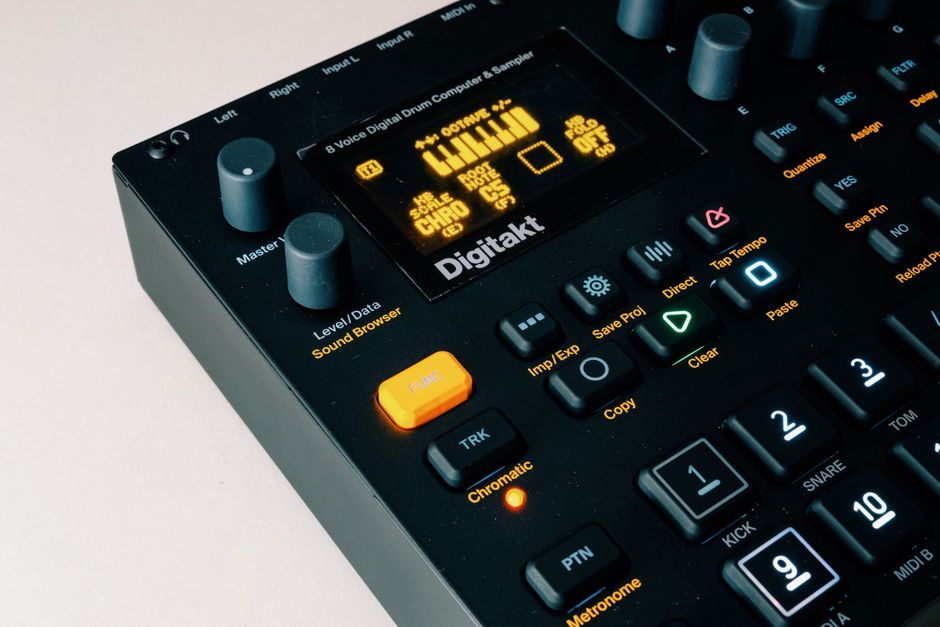
The Digitakt II is the most natural starting point for beat-focused producers. Elektron describes it as a drum computer and stereo sampler with 16 tracks that can each carry a sample or drive external MIDI gear, and a sequencer with 128 steps per pattern. You sample your own sounds or load them in, then arrange them with the Elektron sequencer.
Choose the Digitakt if your music is built from drums and samples, and if you want one box that can also sequence your other hardware. It is the most immediate of them all to get a beat out of.
Digitone II: the FM synth
The Digitone II is a synthesizer rather than a sampler. Elektron lists it as a 16-voice polyphonic digital synth with 16 tracks and the same 128-step sequencer, built around FM synthesis alongside other machines including Wavetone and Swarmer. FM has a reputation for being hard to program, but the Digitone wraps it in a friendlier layout.
Choose the Digitone if you want to make your own melodies, pads and basslines from scratch, and you are drawn to bright, metallic or bell-like tones that FM does so well. It pairs beautifully with a Digitakt handling the drums.
Octatrack MKII: the performance sampler
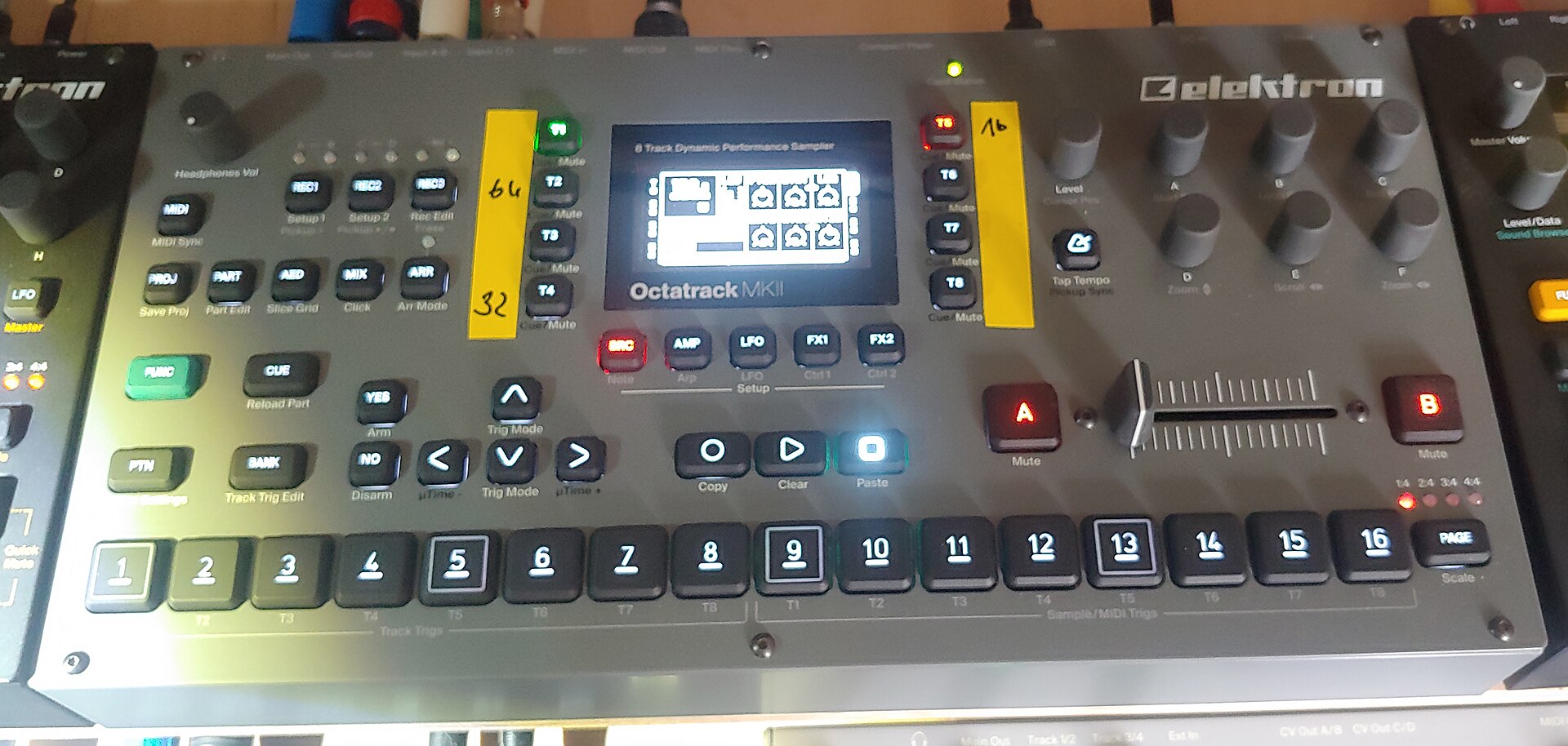
The Octatrack MKII is the veteran and the most open-ended. It has 8 stereo audio tracks plus 8 MIDI tracks, a crossfader for live transitions, and it can sample and mangle audio in real time. Producers use it as a live-remix engine, a central hub that also processes and mixes their other gear.
Choose the Octatrack if you perform live, if you want to build sets that morph on the fly, or if you want one machine to act as the brain and mixer of a whole setup. It is the steepest learning curve of the four, so it rewards patience. Note that Elektron does not list the Octatrack for Overbridge, so its audio still reaches a computer through an interface rather than over USB, which our guide to Overbridge and which boxes support it sets out in full.
Syntakt: the drum computer with analog voices
The Syntakt is the one most first-Elektron guides forget, and it is often the right answer. Elektron lists it as a 12 track drum computer and synthesizer that mixes digital and analog synthesis: eight digital tracks with 11 selectable machines each, three analog drum tracks, one analog cymbal track, and a separate sequenceable FX track. Its sequencer runs 64 steps per pattern rather than the 128 of the Digi boxes.
Choose the Syntakt if you want drums that are synthesised rather than sampled, and a box that covers percussion and tonal parts in one. It is the middle path between the Digitakt’s sampling and the Digitone’s pure synthesis, and every track can be switched to a MIDI machine to sequence your other gear.
A cheaper way in
If the flagships feel like too much money for a first box, Elektron also makes the smaller Model:Samples and Model:Cycles, which use a simplified version of the same sequencer. They are a low-risk way to find out whether the Elektron workflow suits you before committing to a Digitakt or Octatrack.
How to decide
Keep it simple. If you build tracks from drums and samples, get the Digitakt II. If you want to write your own melodic parts, get the Digitone II. If you want synthesised drums and tonal parts in one box, get the Syntakt. If you perform and want a live-remix brain, get the Octatrack MKII. All four speak MIDI fluently, so whichever you pick can sequence the rest of your gear, which matters as soon as you add a second box. When you do, read our guide to syncing a dawless jam so everything stays locked in time.
Last fact-checked: 29 August 2026