A groovebox is an all-in-one music machine: sounds, a sequencer and effects in a single box, with no computer required. For anyone building a dawless setup, a standalone groovebox is often the whole studio. This guide compares the main options by how they actually work, so you can match one to your music.
There is no single best box here. Each has a different workflow, and the right choice is the one whose way of working suits your brain.
Akai MPC: the pad-and-sample classic
The MPC line practically defined sample-based beat-making, and the standalone models run without a computer. The current ones are the MPC Live III and the more compact MPC One G2, which replaced the MPC Live II and the MPC One+ that many guides still name. Take the MPC Live II as the reference point for what this class gives you: Akai lists 16 velocity- and pressure-sensitive pads, a 6.9 inch full-colour touch display, 16 GB of storage, and, importantly for a hardware rig, four TRS CV/Gate jacks carrying eight outputs. Ableton lists the MPC range among its Link-enabled products, so it syncs over a network too.
Choose an MPC if you think in terms of finger drumming and chopping samples, and you want a big touchscreen and a mature, sample-centric workflow. It is the natural home for hip-hop and sample-heavy production.
Roland SP-404 MK2: the sampler and performer
The SP-404 MK2 is smaller and more performance-focused. Roland gives it 17 pads, a large bank of onboard effects, and battery power for true portability. It is less about a big arrangement view and more about sampling, chopping and performing effects live. We cover it in depth in our SP-404 MK2 workflow guide.
Choose the SP-404 if you value portability, hands-on effect performance, and a lo-fi character that has become a genre of its own.
Polyend Tracker: the tracker workflow
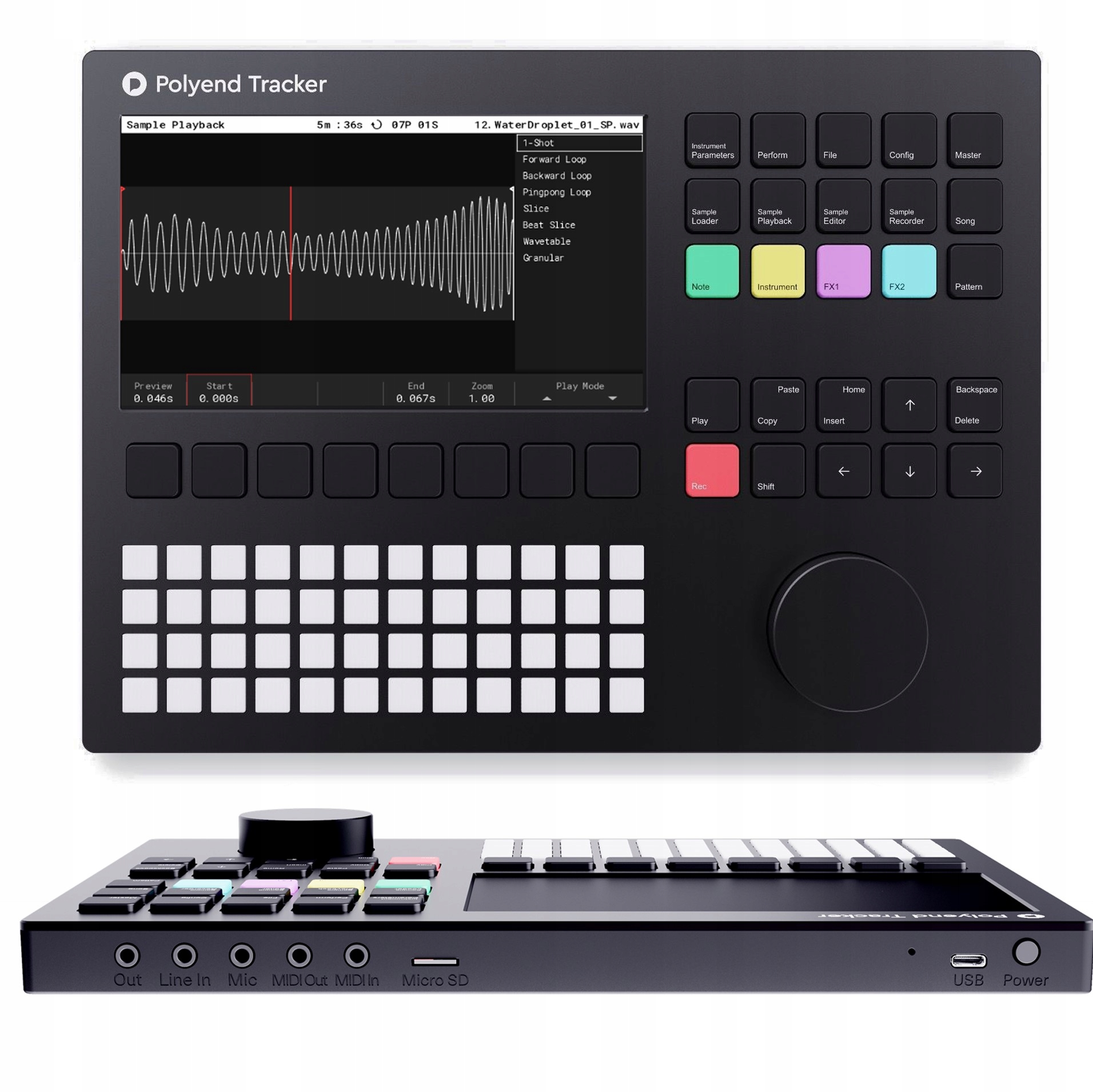
The Polyend Tracker uses a completely different approach borrowed from old computer music software. Instead of a left-to-right timeline, a tracker runs top to bottom: notes scroll down columns, one row per step. There are two current machines, the full-size Tracker+ and the battery-powered Tracker Mini. Both start from eight universal tracks for audio and MIDI, with patterns from 1 to 128 steps, and both now add eight further tracks for MIDI or the onboard synth engines, which Polyend describes as a 16-track sequencer.
Choose a Tracker if you like a keyboard-and-grid, data-entry style of writing, or if you came from software trackers. It is unusual, precise, and produces music that often sounds nothing like pad-based boxes.
Elektron boxes: the deep sequencer
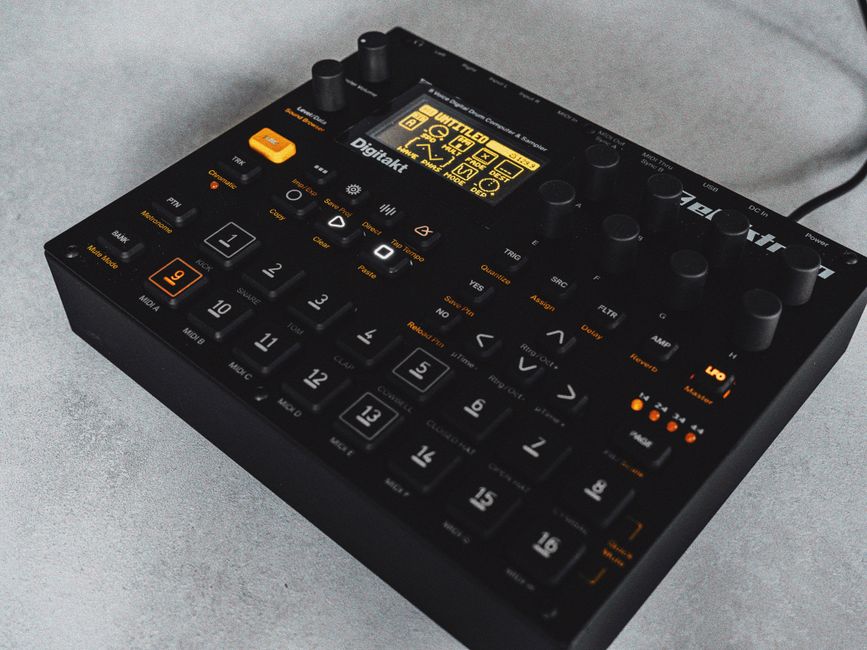
The Elektron machines, such as the Digitakt and Octatrack, are grooveboxes built around one of the deepest step sequencers in hardware, with parameter locks that change any setting on any step. They are less about finger drumming and more about programming patterns that evolve. We compare them in detail in which Elektron box to start with.
Choose an Elektron if you love sequencing and want patterns that move and mutate rather than loop flatly.
Matching a box to how you think
The honest way to choose is to watch how each one is played and ask which looks like fun to you.
- You want to finger drum and chop samples on a big screen: look at the MPC.
- You want portability and live effect performance: look at the SP-404 MK2.
- You like grids, data entry and precision: look at the Polyend Tracker.
- You want the deepest sequencer and evolving patterns: look at Elektron.
Whichever you pick, it can be the centre of a setup and sync your other gear over MIDI. When you add that second box, our guide to syncing a dawless jam will save you a lot of head-scratching.
Last fact-checked: 29 August 2026