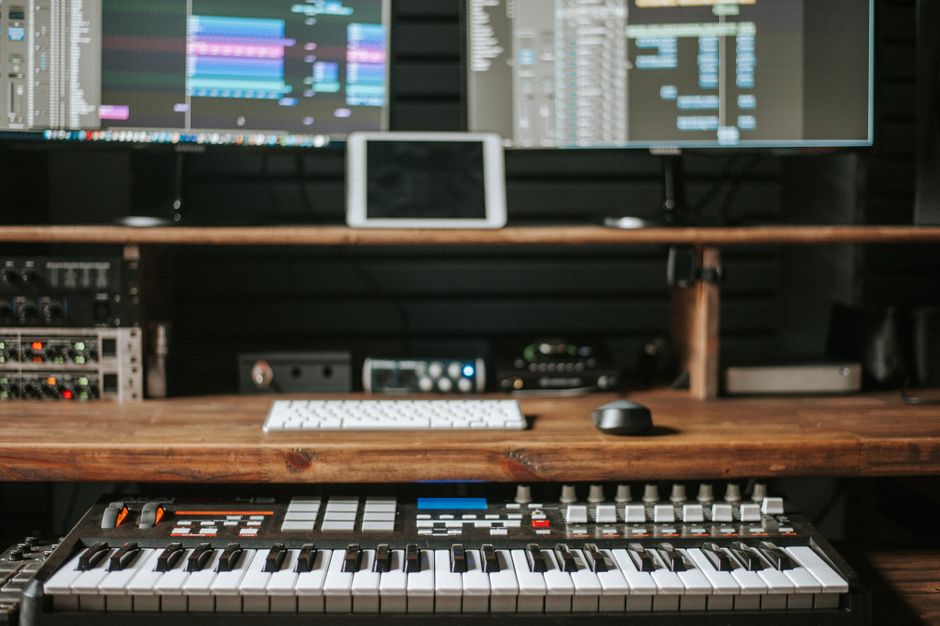
Dawless means making music without a computer running a Digital Audio Workstation. Instead of a mouse and a screen, you build tracks on hardware: a sampler, a drum machine, a synth, a sequencer, all wired together and playing in time. For a lot of bedroom producers it is a way to finish more music, because you commit to sounds instead of endlessly tweaking plugins.
This guide walks through what a dawless setup actually needs, how the pieces connect, and a sensible order to buy them in so you do not waste money. It is deliberately budget-first: you can start with one box and grow from there.
What “dawless” really means
A DAW like Ableton Live or FL Studio gives you plenty of tracks, undo, and total recall. That freedom is also the trap. It is very easy to spend an evening auditioning snare samples and end up with nothing finished. Hardware pushes back. A groovebox has a fixed number of tracks and a small screen, so you make decisions and move on.
Dawless is not anti-computer. Many producers record their hardware jams into a DAW at the end for arranging and mixing. The point is that the ideas happen on the gear, in real time, with your hands on knobs. If you want the best of both worlds, our guide to integrating hardware with Ableton Live shows how to bridge the two.
The building blocks of a setup
Almost every dawless rig is some combination of five roles. One box can cover several of them.
- A sound source. This makes the actual audio: a synth, a sampler, or a drum machine. A sampler such as the Roland SP-404 MK2 is a great first box because it can be drums, bass, melody and effects all at once.
- A sequencer. This records and repeats your patterns so your hands are free. Most grooveboxes have a sequencer built in.
- A clock, or sync source. When you have more than one box, one of them has to be the timekeeper so everything stays locked together. This is the part beginners underestimate. Our guide to syncing a dawless jam covers it in full.
- A mixer. Somewhere the separate outputs come together into one stereo signal you can record or send to speakers.
- A recorder. A handheld recorder, an audio interface into a laptop, or the sampler itself resampling the mix.
Start with one box that does a lot
The cheapest mistake is buying five single-purpose units before you know how you work. Start with one capable groovebox or sampler that covers sound, sequencing and effects on its own. You can make complete tracks with nothing else.
Two popular starting points are the SP-404 MK2, which is built around sampling and performance effects, and the Elektron family of boxes, which are built around a deep step sequencer. We compare the Elektron options in which Elektron box to start with, and we look at the wider field of all-in-one machines in standalone grooveboxes compared.
Adding a second and third box
Once one box feels limiting, the usual next step is a dedicated synth for melody and bass, or a drum machine for punchier percussion. The moment you add a second box, you have to solve sync. In practice that means running a MIDI cable from your main sequencer to the new box and setting the new box to follow external clock.
Further down the line, some producers move into modular. A Eurorack system lets you build a synth from individual modules, patched together with cables. It is powerful and open-ended, but it is also the deep end. If you are curious, read Eurorack for beginners before you spend anything.
A realistic first setup
If you want a concrete plan, this is a solid and affordable path:
- One sampler or groovebox as your core. Learn it properly before buying anything else.
- A pair of headphones or small monitors so you can actually hear what you are doing.
- A way to record the output, even if that is just your phone or a handheld recorder to start.
- Later, a small mixer and a second sound source once you know what your music is missing.
Notice that none of this requires a full studio. The whole appeal of dawless production is that a table, one box and a set of headphones is enough to make finished music. The gear that helps most is the gear you already understand.
Finish tracks, do not collect gear
Gear acquisition syndrome, the urge to keep buying the next box, is the enemy of a dawless producer. A limited setup that you know inside out will always beat a pile of hardware you half understand. Pick one capable machine, learn its workflow, and finish something. Everything else can wait.
Last fact-checked: 14 October 2026